
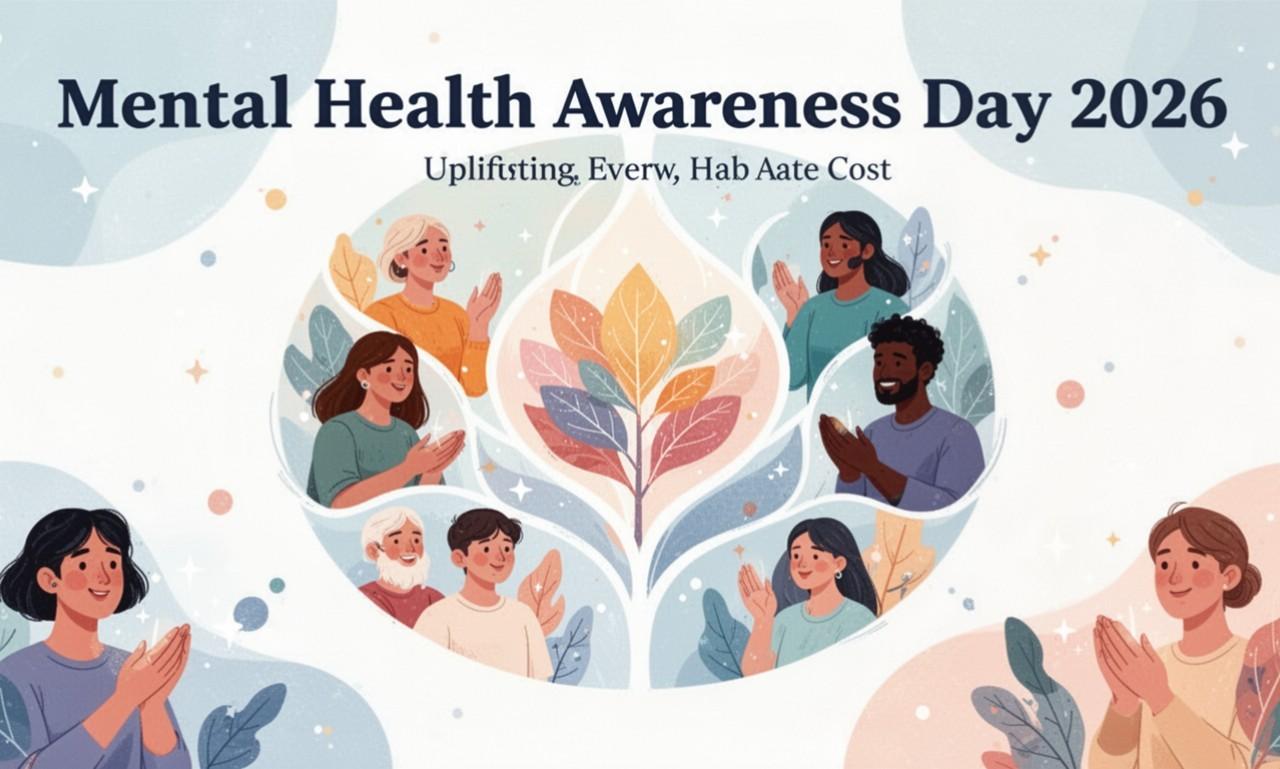
Hello! This is a simple article about Mental Health Awareness Day in 2026. There is World Mental Health Day, which takes place each year on 10 October. This day brings attention to mental health issues, assists in lowering stigma, and pushes individuals to reach out for support. So, although it’s early 2026 and the precise theme for this year’s event has possibly not yet been decided, recent trends suggest that it may build on themes such as access to services in difficult times. We’ll discuss backstory, the stakes, numbers, hints, and more. We are going to try—simple words, short parts, make it exciting and helpful.
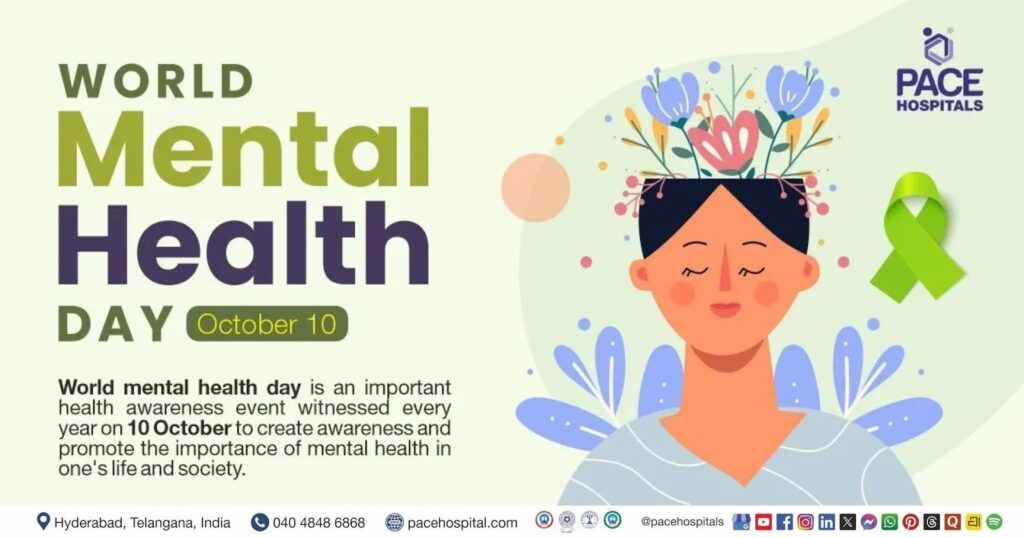
What Is Mental Health Awareness Day?
Mental Health Awareness Day: It is all gradual and has led to specific times set aside for mental well-being discussions. The big one is World Mental Health Day, observed on Oct. 10 and initiated in 1992 by the World Federation for Mental Health (WFMH). It has the support of the World Health Organization (WHO), and it is a campaign to prioritize mental health around the globe.
This will happen in the year 2026 on a Saturday, October 10. That could mean a larger turnout for events over the weekend, like walks, webinars, or neighborhood talks. Mental health involves how we think, feel, and respond to everyday life. At our best, we are intimately powerful and connected. Though that cannot make things like anxiety or depression more difficult.
Why focus on 2026? The world still contends with the fallout from pandemics, wars, and climate shifts. These can damage mental health, so awareness days allow us to accept
The History Behind It
World Mental Health Day began in 1992 to educate people and fight stigma. Stigma means negative views that stop people from getting help. Back then, mental health was often hidden or misunderstood. The WFMH wanted to change that by sharing stories and facts.
Over the years, themes have evolved:
- 2021: Mental Health in an Unequal World
- 2022: Make Mental Health & Well-Being for All a Global Priority
- 2023: Mental Health is a Universal Human Right
- 2024: It is Time to Prioritize Mental Health in the Workplace
- 2025: Access to Services—Mental Health in Catastrophes and Emergencies
For 2026, the theme isn’t official yet, but it might continue emphasizing equity and crisis support. Events have grown from small talks to global campaigns with millions involved. In 1995, more countries joined conferences and celebrations.
Another prime time for such awareness comes in May, celebrating Mental Health Awareness Month (MHA), particularly in the US—thanks to a run by Mental Health America. Their theme for 2026 might be “More Good Days, Together” and center on connection and personal goals.
These days remind us that mental health has been a battle for decades. We’ve come a long way, from old asylums to modern therapy, but there’s still more work to be done.
Why Mental Health Awareness Matters in 2026
Mental health is more important than ever—in 2026. Things such as economic strain, social stress from social media, and natural disasters. Awareness is one of the ways we can break down walls so that people will seek help without shame.
Key reasons it matters:
- Reduces Stigma: Talking openly shows mental health issues are common, not weaknesses.
- Promotes Early Help: Catching problems early prevents bigger issues.
- Builds Support Networks: Communities, workplaces, and schools can create safe spaces.
- Addresses Global Crises: With wars and emergencies, access to care is crucial.
One in eight people worldwide lives with a mental health condition. The COVID-19 pandemic increased anxiety and depression by 25%. In 2026, we need to keep the momentum from past years.
Awareness also saves lives. Suicide prevention is a big part—knowing signs like withdrawal or hopelessness can help.
Current Mental Health Statistics You Should Know
Stats show the real picture. Here’s a quick look at 2026 trends based on recent data:
| Region | Key Statistic | Source |
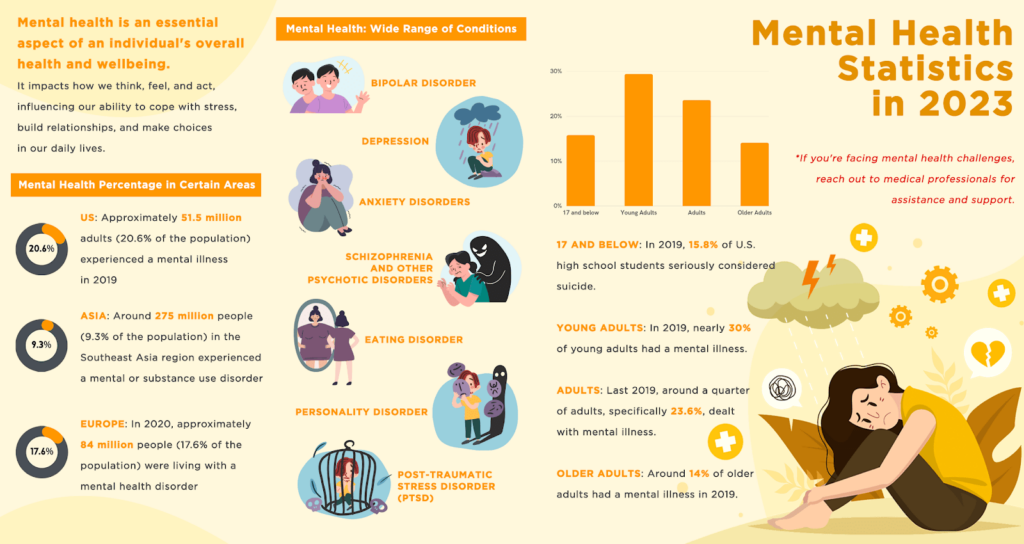
| US | About 51.5 million adults (20.6%) had a mental illness in 2019. | |
| Asia | Around 275 million people (9.3%) in Southeast Asia have mental or substance use disorders. | |
| Europe | In 2020, 84 million people (17.6%) lived with mental health disorders. | |
| Global | Nearly 1/3 of disaster-affected people face PTSD, depression, or anxiety. |
Youth are hit hard:
- 15.8% of US high school students seriously considered suicide in 2019.
- 30% of young adults had a mental illness in 2019.
- Older adults: 14% had mental issues.
In colleges, 30% of students report stress hurting their performance, and 85% felt overwhelmed last year.
Women often face more anxiety due to brain chemistry differences. But everyone is affected—from teens to seniors.
These numbers highlight why awareness days push for better funding and services. In 2026, with ongoing global events, we might see updates showing even more need.
The Silent Epidemic: Statistical Insights into Mental Health – TherapyDen
The Theme for World Mental Health Day 2026
As of March 2026, the official theme hasn’t been announced. WHO and WFMH usually reveal it closer to October. But based on 2025’s focus on “Access to Services—Mental Health in Catastrophes and Emergencies,” 2026 could expand on that.
Possible ideas:
- Strengthening systems in crises.
- Equity for vulnerable groups like refugees or disabled people.
- Community-based care.
In workplaces, themes like “Mental Health is a Universal Human Right” encourage group therapy or breaks.
For Mental Health Awareness Week in May 2026 (UK), the theme might be “Community,” building on past ones like loneliness. Check official sites for updates!
How to Participate in Mental Health Awareness Day 2026
Joining is easy and impactful. Here are ways to get involved:
- Wear Green: The green ribbon symbolizes mental health awareness. Pin one on!
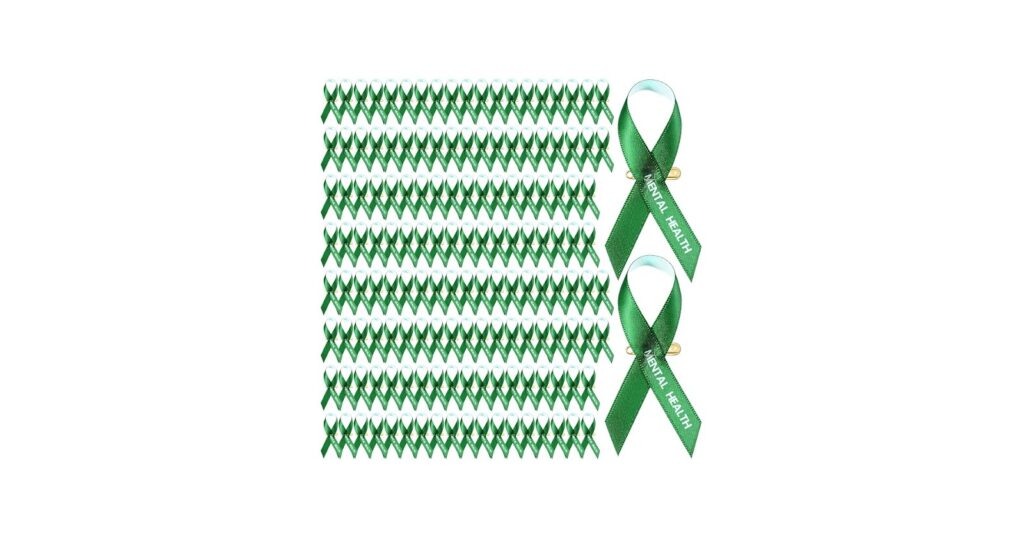
Amazon.com: Hanaive 150 Pcs Mental Health Awareness Green Satin Fabric Ribbons with Safety Pins Mental Health Awareness Items for Charity Public Social Event Welfare Supplies
- Host or Attend Events: Organize a tea and talk, yoga session, or webinar. In 2026, look for UN events on emergencies.
- Share on Social Media: Post facts, stories, or quotes. Use #WorldMentalHealthDay2026.
- Volunteer: Help at local NGOs or hotlines.
- Educate Yourself: Read books or watch talks on platforms like YouTube.
- Support Others: Listen without judgment. Ask, “How can I help?”
Workplaces can do group therapy or campaigns. Schools might have assemblies on stress.
Global events include conferences in Italy or a theater in India. In London, Great Mental Health Day on January 30, 2026, focuses on “Celebrating Everyday Spaces.”
Everyday Tips for Better Mental Health
You don’t need a special day to care for your mind. Here are simple, proven tips:
- Stay Active: Walk, dance, or exercise. It boosts mood chemicals.
- Eat Well: Fruits, veggies, and balanced meals help brain function.
- Sleep Enough: Aim for 7-9 hours. Poor sleep worsens anxiety.
- Connect: Talk to friends or family. Isolation hurts mental well-being.
- Manage Stress: Try meditation or deep breathing. Apps like Calm help.
- Limit Screens: Reduce doomscrolling—endless bad news can overwhelm.
- Seek Help: Therapists use CBT (Cognitive Behavioral Therapy) to change negative thoughts.
For teens: World Teen Mental Wellness Day on March 2 reminds us to normalize talks.
Remember, small steps add up. If you’re in a crisis, call helplines.
Resources and Support Organizations
Help is out there. Here’s a list:
- WHO: Free guides on mental health in emergencies.
- MHA (US): Toolkits for “More Good Days.”
- Mental Health Foundation (UK): Posters and tips on overwhelm.
- NAMI (US): Support groups for families.
- Hotlines: Like 988 in the US for crises.
- Apps: Headspace for meditation, Moodpath for tracking.
For global: WFMH campaigns reach 2 million on social media. In Bangladesh (your location), check local NGOs like BRAC for support.

Supporting Mental Health: 5 Tips to Improve Performance
Personal Stories: Real-Life Inspiration
Stories make awareness real. (These are general examples; be sure to respect privacy.)
Consider Alex, a 25-year-old from New York. When I lost my job in 2025, anxiety started hitting really hard. Joining a community group on World Mental Health Day was beneficial. “Talking helped decrease my stigma,” says Alex. Alex now volunteers to show that recovery is possible.
Or Maria, a burned-out teacher. She plans a school event for 2026 on workplace mental health. “Breaks and aid made my life ”.
For refugees, many experience PTSD from crises. Awareness days call for increased access.
These tales remind us: You are not alone. Sharing builds hope.
Challenges and Solutions in 2026
Challenges include:
- Limited access in rural areas.
- Cost of therapy.
- Cultural stigma in places like Asia.
Solutions:
- Telehealth for remote help.
- Free community programs.
- Education to change views.
In catastrophes, 1/3 of people need mental support. 2026 could see more funding for this.
Workplaces: Ideas like yoga or quote videos.
Looking Ahead: Making 2026 a Turning Point
As we approach October 10, 2026, let’s commit to action. Whether wearing a ribbon, hosting a talk, or just checking on a friend, every bit helps.
Mental health awareness isn’t one day—it’s every day. By reducing stigma, sharing stats, and using resources, we create a kinder world.
Thanks for reading! If you have stories or questions, share them. Remember: It’s okay not to be okay. Seek help, and prioritize your well-being.