
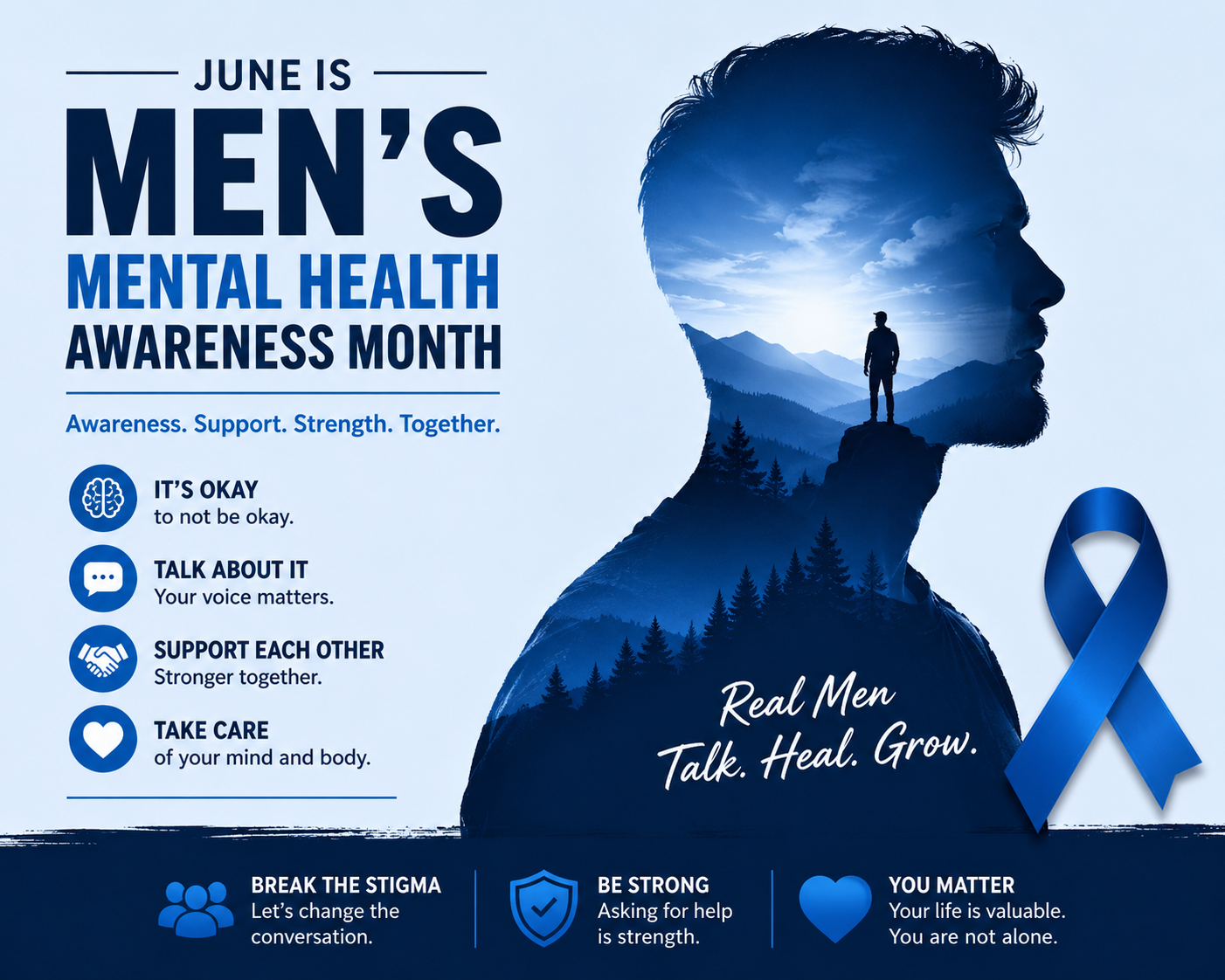
For generations, males have been educated to do everything behind a mask of emotional detachment. Sayings such as “be a man,” “salt the wound,” and “boys don’t cry” have been ingrained into males by family members, sporting organizations, and companies. This has led to a global epidemic of silence wherein millions of men battle with depression, anxiety, PTSD, and emotional turmoil but never seek help.
Men’s Mental Health Awareness Month (celebrated in June, along with other international campaigns such as Movember in November) plays a very important role in breaking down these negative stereotypes. It allows people to reclaim their power, to educate their families and communities, and to access pathways for healing.
1. Understanding Men’s Mental Health Awareness Month
When and Why It Is Observed
Although June has been designated as Men’s Mental Health Awareness Month in many places around the globe, November has Movember, a movement worldwide to bring awareness about the health issues of men, which include prostate cancer, testicular cancer, and suicide prevention.
The primary objective of these dedicated observances is simple yet life-saving: to save lives by opening honest, non-judgmental conversations around male mental health.
┌─────────────────────────────────────────┐
│ Men’s Mental Health Key Objectives │
└────────────────────┬────────────────────┘
│
┌────────────────────────────┼────────────────────────────┐
▼ ▼ ▼
┌───────────────┐ ┌───────────────┐ ┌───────────────┐
│ Break Social │ │ Recognize │ │ Promote Early │
│ Stigma │ │ Male Symptoms │ │ Intervention │
└───────────────┘ └───────────────┘ └───────────────┘
The Core Goals of the Movement
- De-stigmatizing Help-Seeking Behavior: Normalizing therapy, counseling, and peer support for men of all ages.
- Educating the Public on Gender-Specific Symptoms: Recognizing that depression and distress do not look identical across all individuals.
- Lowering Suicide Rates: Addressing the disproportionately high rates of suicide among men globally.
- Building Supportive Ecosystems: Equipping partners, workplaces, and families with tools to recognize when a man is struggling.
2. The Hidden Epidemic: Statistical Reality
As evidenced by the statistics on male mental health, there is a clear gap between their inner pain and diagnoses. Due to the reluctance of men to discuss their problems with physicians, they have to suffer in complete solitude.
Key Global Findings
- Suicide Rates: Globally, men die by suicide at rates significantly higher than women. In many Western nations, men account for roughly 75% to 80% of all completed suicides.
- Reluctance to Seek Help: Studies consistently show that nearly 1 in 10 men experiences depression or anxiety, yet less than half seek treatment.
- Substance Abuse: Men are significantly more likely to develop substance use disorders, often using alcohol or drugs as a self-medication mechanism for unaddressed psychological trauma.
- Undiagnosed Depression: Because male depression often manifests as physical ailments or anger rather than sadness, doctors frequently miss the underlying mental health triggers.
| Indicator | Male Impact Pattern | Primary Underlying Driver |
| Suicide Rates | ~3x-4x higher completion rate than females | High intent, lethality, and reluctance to reach out early |
| Substance Dependency | ~2x higher rate of alcohol abuse | Self-medicating unexpressed emotional pain |
| Doctor Visits | 20–30% less likely to visit a primary care provider | Fear of appearing weak or dependent |
| Workplace Burnout | High incidence of chronic overworking | Tying self-worth exclusively to productivity and income |
3. Cultural Conditioning: The “Stoicism Trap”
In order to comprehend why men tend to resist seeking help, it is important to consider how their society expects men to act based on cultural norms. Boys grow up being conditioned through social cues to avoid emotions of sadness, fear, and helplessness.
1. The Burden of “The Provider”
In many societies, a man is valued based on nothing but his capability to ensure economic stability and physical safety. In cases when he fails due to any of the above reasons, he experiences an identity crisis and embarrassment.
2. Emotional Suppression
When a boy is taught that crying is a weakness, he learns to bottle up his emotions. Over time, through years and years of bottling up his emotions, he acquires alexithymia, which is the inability to label and articulate his emotions. Emotions are never forgotten; rather, they manifest themselves in physical form.
3. Isolation disguised as Independence
The state of hyper-independence is very often regarded as a male trait. Yet being proud of one’s ability to cope with everything alone means not developing meaningful emotional relationships with other people. That is why most adult men do not have any friends at all.
4. How Mental Health Symptoms Manifest Differently in Men
Depression and anxiety do not present the same way in everyone. While traditional diagnostic criteria emphasize tearfulness, sadness, and withdrawal, men frequently display externalizing symptoms.
Common “Male-Pattern” Symptoms
- Irritability and Anger: Turning internal emotional pain outward in the form of short tempers, hostility, or excessive road rage.
- Escapism and Overworking: Throwing oneself compulsively into work, exercise, gaming, or high-risk behavior to avoid sitting with uncomfortable thoughts.
- Risk-Taking Behaviors: Engaging in reckless driving, heavy gambling, unsafe sexual practices, or dangerous physical activities.
- Physical Aches and Pains: Complaining of chronic headaches, digestive issues, back pain, or heart palpitations without a clear physical cause.
- Social Withdrawal disguised as Cynicism: Becoming detached, sarcastic, or hostile toward friends, family, and colleagues.
5. Major Mental Health Challenges Impacting Men
A. Clinical Depression
Male depression tends to go unnoticed because society tends to train men to conceal any sign of vulnerability. Rather than exhibiting intense sadness, a man suffering from depression will exhibit excessive defensiveness, criticism, or obsession with success.
B. Anxiety and Panic Disorders
Anxiety in men often expresses itself through physical tension, difficulty sleeping, restlessness, and hyper-vigilance. Men are particularly susceptible to performance-related anxiety in professional and intimate settings.
C. Post-Traumatic Stress Disorder (PTSD)
Post-traumatic stress disorder for males can come from military combat, childhood abuse, physical assaults, or occupational trauma such as that of first responders. The condition results in extreme numbness, nightmares, and hyper-reactiveness.
D. Male Loneliness and Isolation
Sociologists often speak of a modern “friendship recession” among men. As men age, structural factors—such as long work hours, family commitments, and lack of community spaces—cause social networks to shrink, leaving many without meaningful emotional outlets.
6. Practical Strategies for Improving Men’s Mental Health
Improving mental well-being requires action across multiple levels: personal habits, interpersonal relationships, and professional support systems.
1. Daily Self-Care & Lifestyle Foundations
- Prioritize Physical Movement: Exercise releases endorphins, lowers cortisol levels, and improves sleep quality. Strength training, cardio, and team sports are proven tools for improving mood.
- Protect Sleep Hygiene: Sleep deprivation dramatically increases emotional volatility and anxiety. Aim for 7 to 9 hours of quality sleep per night.
- Practice Mindfulness and Breathwork: Simple techniques like 4-7-8 breathing or box breathing help regulate the sympathetic nervous system during acute stress.
2. Building an Emotional Toolkit
- Name the Emotion: Shift from saying “I’m fine” or “I’m just angry” to identifying deeper feelings like exhaustion, feeling overwhelmed, or fear of failure.
- Reframe Vulnerability: Recognizing that seeking help is an act of courage—requiring honesty and strength—rather than a weakness.
- Find “Shoulder-to-Shoulder” Connection: Men often bond better when engaging in shared activities (hiking, working on a project, playing sports) rather than sitting face-to-face. Use these moments to open up gradually.
7. How Friends, Family, and Employers Can Help
Support systems play a decisive role in identifying early signs of mental health deterioration and encouraging action.
What Friends and Family Can Do
- Ask Twice: When a man says “I’m fine,” follow up gently: “How are you really doing lately?”
- Listen Without Offering Instant Solutions: Resist the urge to immediately “fix” the problem. Often, what a man needs most is simply being heard without judgment.
- Watch for Subtle Changes: Keep an eye out for changes in sleep habits, increased drinking, irritability, or withdrawal from social groups.
What Employers Can Implement
- Normalize Mental Health Days: Encourage leaders to openly speak about mental health to reduce workplace stigma.
- Provide Confidential Employee Assistance Programs (EAP): Ensure employees have free, private access to professional counseling services.
- Foster Work-Life Balance: Discourage implicit expectations around late-night emails and excessive overtime.
8. Reaching Out: Helplines and Professional Resources
If you or a man in your life is struggling, immediate support is always available. You do not have to carry the burden alone.
- Emergency & Crisis Lifelines:
- United States / Canada: Call or text 988 for the Suicide & Crisis Lifeline (Available 24/7).
- United Kingdom: Call 111 (NHS) or contact Samaritans at 116 123.
- Australia: Call 13 11 14 for Lifeline Australia.
- International: Visit findahelpline.com to find immediate crisis support in your country.
Conclusion: Taking the First Step
Men’s Mental Health Awareness MonthIt is more than just a yearly campaign that appears in the calendar – it is a life-saving and life-changing movement. Asking for help is not a sign of failure, but rather the very beginning of taking back control of your life.
Whatever form your first step may take, whether it is sitting down and talking things through with a friend, seeing a therapist, or even just going for a walk, please remember that your health and wellbeing matter.
One thought on “Breaking the Silence: The Ultimate Guide to Men’s Mental Health Awareness Month”